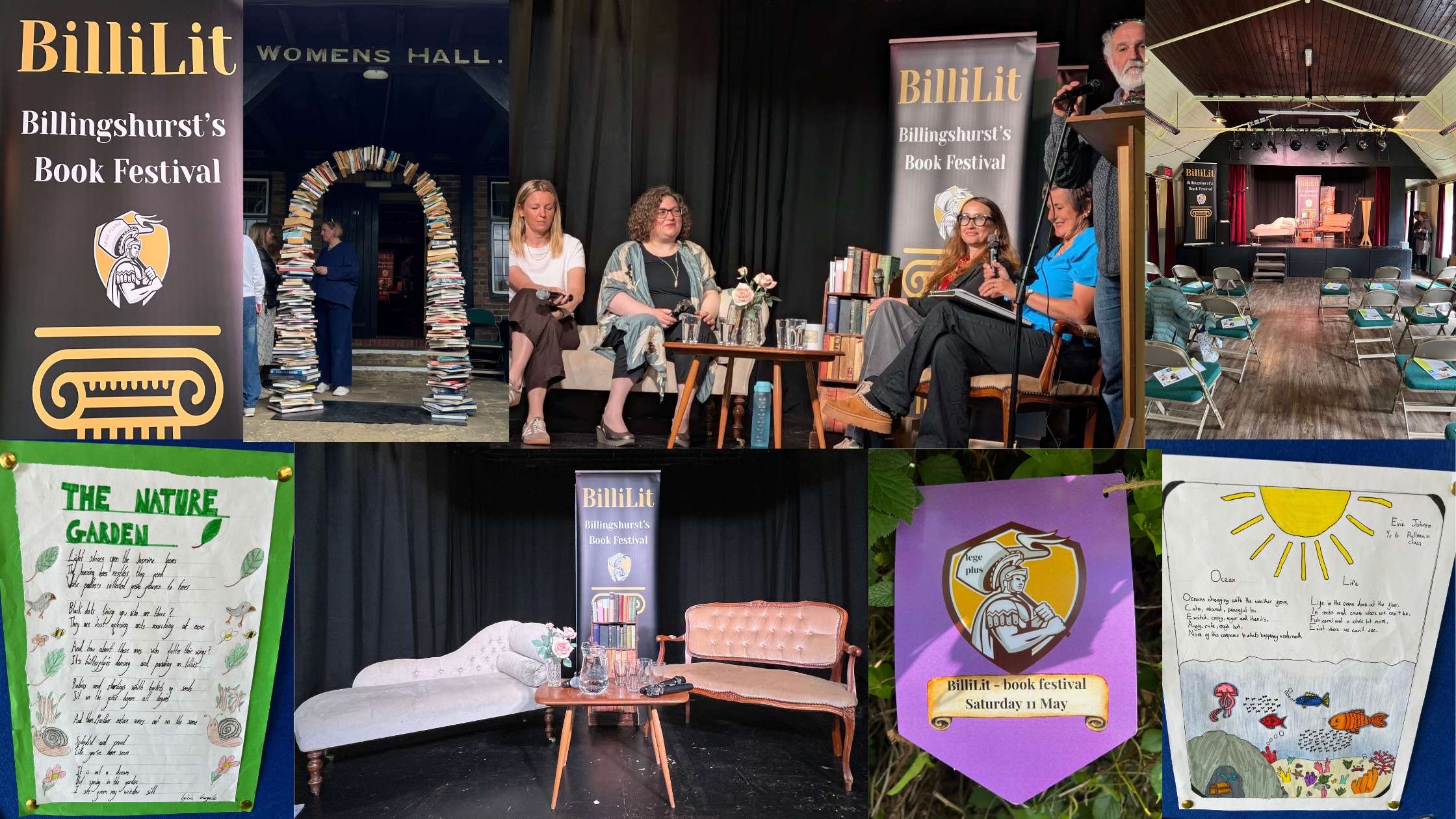
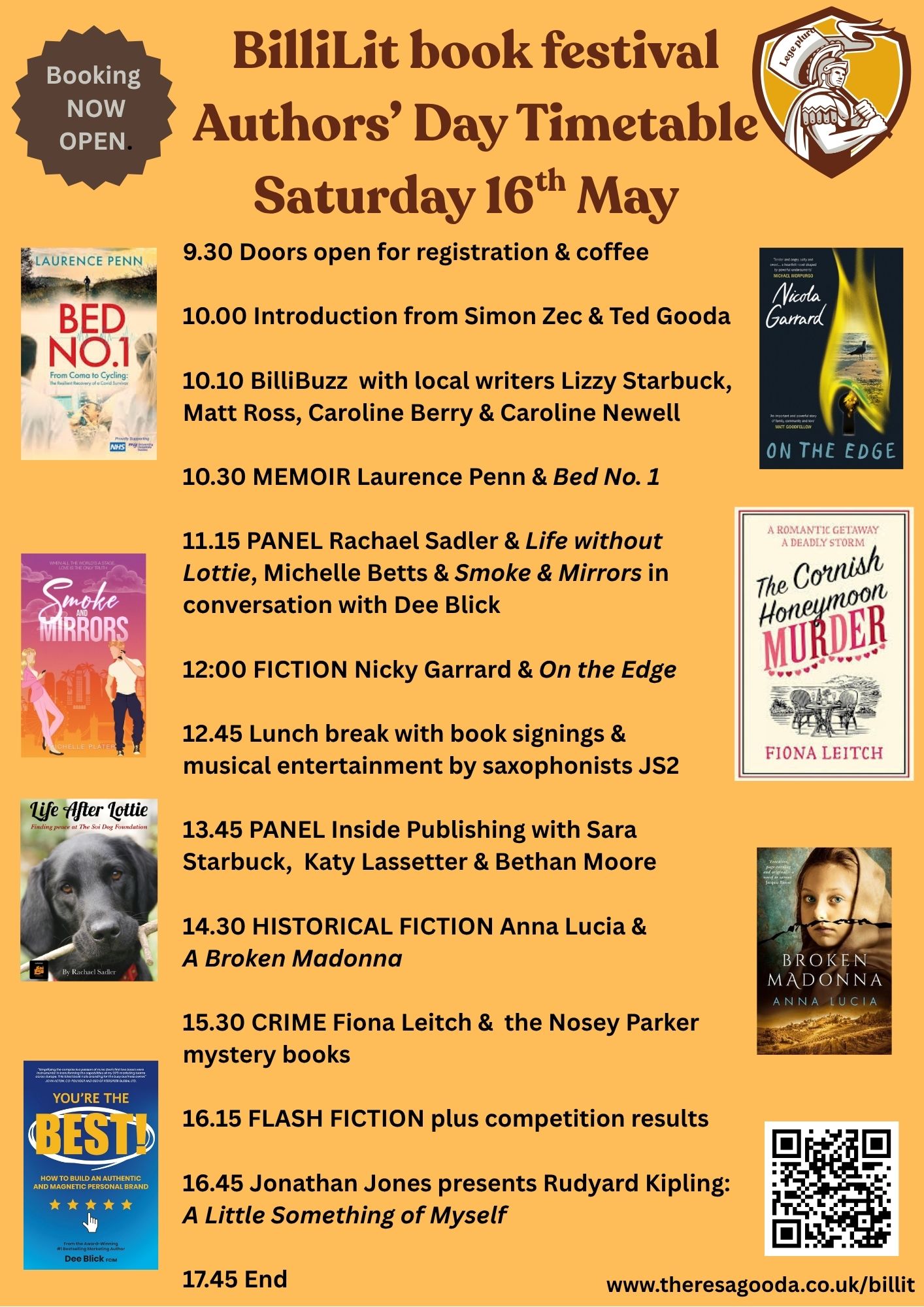
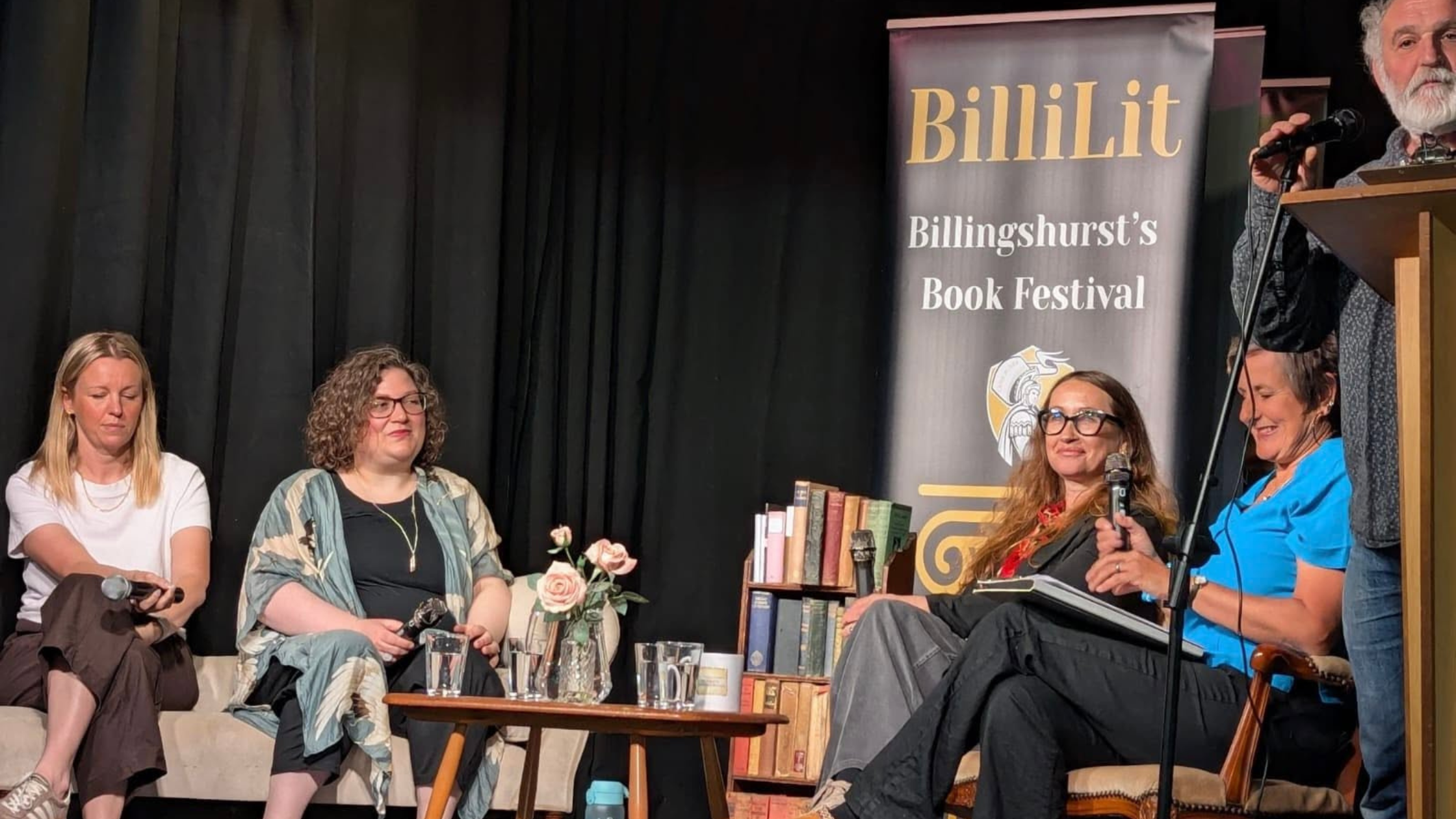
On 16 May, I had the honour of attending BilliLit Book Festival. Following my successful talk, How a Professional Editor Will Bring Your Book to Life, for West Sussex Writers, I was invited as part of an “Inside Publishing” panel. I joined Bethan Moore, Adult International Sales Director for HarperCollins UK, and fellow editor Sara Starbuck live on stage for a lively chat.
The panel was a lot of fun — seated on a velvet chaise lounge, mic in hand — and I met some fabulous folk. We all had slightly different jobs and clients but we all had one thing in common: a passion for books and the health of the publishing industry.
After being interviewed by poet, playwright, ghostwriter and BilliLit organiser Theresa (Ted) Gooda, I really enjoyed listening to a local jazz band, sipping tea in a tent and reading nature poems by pupils from Billingshurst Primary Academy. Right up my wordy bird nerd alley!
Below are the questions Ted asked us to prepare answers for, some of which she asked during the panel talk. Hope you enjoy some insight into this publishing enthusiast’s mind…
Tell us about the job you do now. What’s your role and what does it involve? Give us a quick, ‘day in the life of’ sketch.
As my work’s so varied, I don’t really have typical days. I’m an editor, proofreader and book marketing specialist. So, one day might be dedicated to editing or proofreading the latest title on my list. Or I might be setting up social media accounts, training an author on how to use Instagram to raise awareness or working on copy for their website.
Last week, I was proofreading a client’s book and negotiating with his typesetter to ensure he was ready for his launch. I was also optimising another author’s LinkedIn profile to help him find more speaking gigs. Meanwhile, I was preparing to train a third author on how to write Search Engine Optimised blog posts, so she can build authority in her field and readers can find her website more easily.
What’s your favourite part of what you do?
It would have to be the variety of clients and tasks. No two days are the same and that’s how I like it. When I worked in the marketing department of a big publishing company, everything was hectic, samey and lacked creativity. It wasn’t the best use of my skills.
What led you to this point?
Well, when I was a child, I knew I wanted to work with words. But when it came to university, I wasn’t sure exactly what I wanted to do. So, I did a communication degree, which combined English, persuasive writing, editing, publishing, media studies, advertising and conflict management. This cemented that I wanted to be a writer who works with people.
My first job was as an Online Search Engine Optimisation copywriter in 2005. I had no idea what this was when I was put forward by an agency, but writing for websites (a very new concept back then) intrigued me. I worked in a team where we edited and proofread each other’s work. But within months, I got very ill and returned to work too early. This left me with myalgic encephalomyelitis, also known as chronic fatigue syndrome or ME/CFS. From there, I went to work in publishing. But the energy required to commute and travel, with long working hours, was far too much.
So, I became self-employed and combined all my skills as a copywriter, editor, proofreader and publishing marketing specialist. I set my own hours and travel arrangements. Running my own business definitely isn’t easy. But it does allow me control over my diary and the projects I choose to take on.
What are you each reading right now?
I’m listening to an audiobook, Spring is the Only Season by Simon Barnes. It’s a non-fiction book that combines nature writing with a bit of science and folklore. I’ve been working with a few non-fiction writers lately and I like to keep my hand in. I’m also writing a nature book, based on my weekly wildlife sightings, so it’s research and pleasure in one.
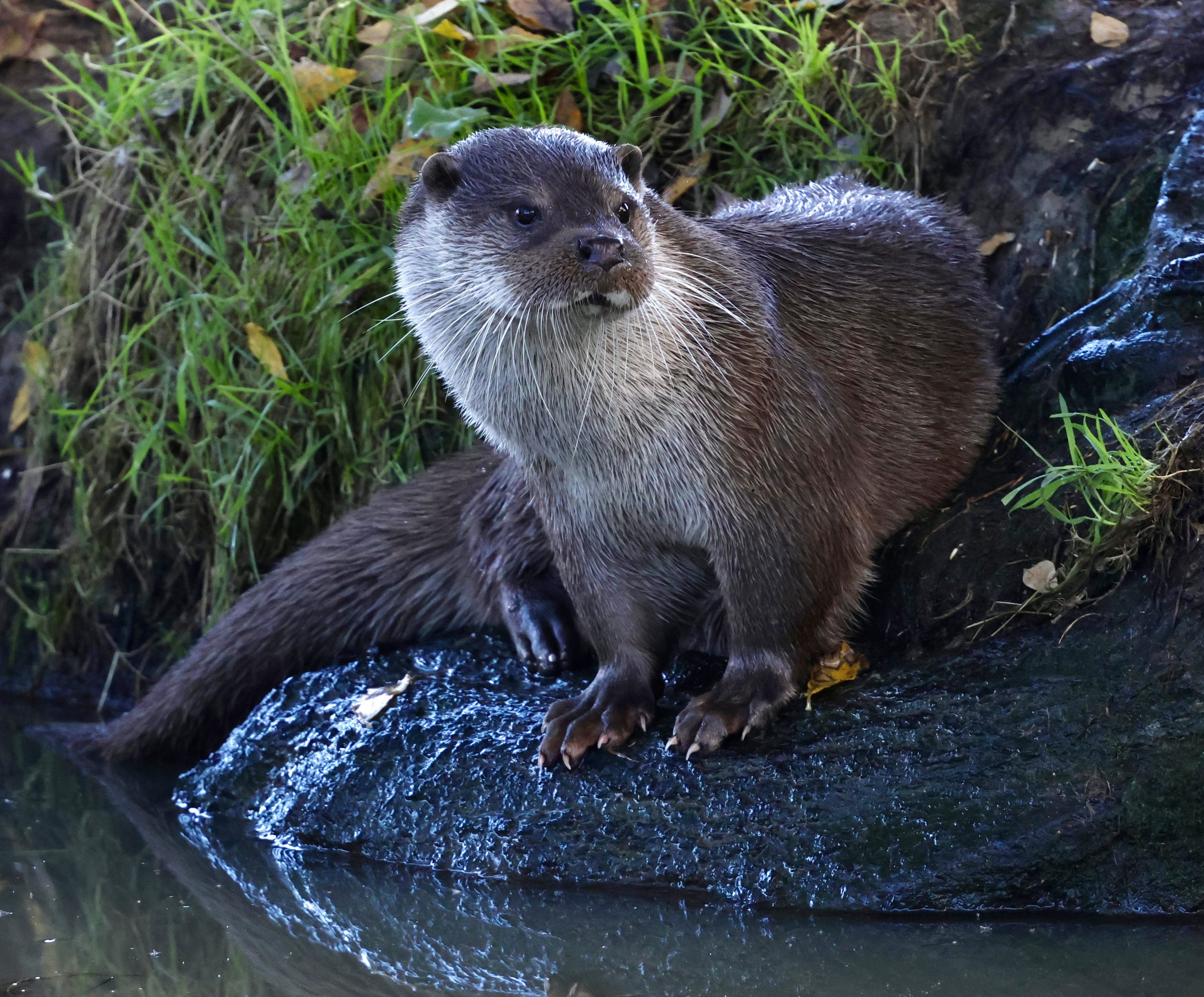
As this interview was back in May, I’d like to add the audiobook I’m listening to now (in August)… The Rose Field: The Book of Dust Volume Three by Philip Pullman. This feeds my love of young adult fantasy. I adored the His Dark Materials trilogy and this is the exciting culmination of everything in Lyra Silvertongue’s magical world. It’s a long book that’s sure to keep me occupied for most of the summer, can’t wait to see what happens! By the way, if I had a daemon, I think he’d be an otter.
What’s the strangest travel experience you’ve had for work?
It wasn’t strange, more life-changing. I used to be scared of flying but, when I worked at Wiley, I was asked to travel to a conference in Nice — alone. I was terrified, but I did it. And because I was forced to face my fear of flying with no one to hold my hand, I had no choice but to overcome it. I’m a much more confident flyer now!
How glamorous is working in book publishing?
Not very! Although I did recently accompany one of my authors to Bournemouth Writing Festival to take photos and videos she could use for social media. We made sure to get a hotel with a pool and jacuzzi, so we added some glam to the trip! When I worked for Wiley, I got to travel internationally, and people assumed it was glamorous. It wasn’t. I mostly sat alone on a plane and then saw the inside of a conference centre for four days. I did get to expense some pretty nice gelato, though!
What makes a book travel well across different cultures?
It should be a story that’s simple and relatable — with human connection and resonance. Also, when it comes to editing, sensitivity checks are important. For example, swearing might be part of your personality for your memoir or part of your character’s attributes, but it might not go down so well with some cultures. This might be negotiated by replacing the letters of a swear word with asterisks. The implied meaning is still there, but it’s arguably less offensive. This was what I advised for Sharon Brisley-Moore’s book, Over Catastrophising Daily.
Can you tell us about the funniest/strangest proofreading error you’ve encountered?
It’s not so much funny as slightly odd and irritating that it keeps rearing its ugly head. It’s the word seagull. As I said, I’m into wildlife watching and I’m a bit of a bird nerd. There’s no such bird as a “seagull,” but it’s become common parlance to refer to all types of gull as seagulls.
I’ve seen it used in a couple of children’s books I’ve edited, and I explained to the authors that there’s no such bird and that using the term “gull” or a specific species like “herring gull” or “black-headed gull” would be better. Both times it was ignored.
I understand that it’s used commonly, and people think that’s accepted. But when you’re writing children’s books, I think you have a duty to teach them correctly, so accuracy is important. Otherwise, you’re perpetuating a problem and making inaccuracy OK. It’s a bit like the Gen Z trend of not using full stops. Are we going to let that one slide too?
How quickly can you tell if a manuscript has real potential?
Very quickly, if it draws me in. Recently, during one of my Self-publishing Surgeries, I read the manuscript for a children’s book and started creating the illustrations in my mind. It had a combination of nostalgia (reminiscent of my favourite childhood books), folklore, culture and a fun freshness. It resonated and I pictured everything — the complete book.
Is it easier to work with an established or a debut author? What’s the hardest type of feedback for writers to hear and how do you help them navigate it?
I think both have their advantages. An established author knows more about the process — how it works, how long it takes, the commitment needed from both parties, the importance of timing and deadlines. But a debut author isn’t comparing you to their previous editor. We’re all very different. Preconceptions and what we’re used to could get in the way.
A lot of feedback is hard for writers to hear, because you’re suggesting improvements to their “baby”. I navigate this by building a strong relationship and communication channel with my clients. I always give kind, constructive feedback. I don’t edit for the sake of it. And I always explain why I’ve made suggestions if it isn’t black-and-white grammar or word-use stuff.
What’s a common mistake new writers make?
The most common mistake I’ve come across is that new writers don’t know the difference between editing and proofreading. They also don’t understand that there’s a difference between self-editing (making your own improvements) and professional editing (from a skilled and experienced industry professional) in its various forms. And that having their neighbour’s friend look over it because she used to be an English teacher isn’t the same as professional editing — that’s more alpha or beta reader territory.
Most enquiries I get are from authors wanting me to proofread their book. I always ask to see a sample so I can get a taste for the writing and the stage the manuscript is at. More often than not, I’ll let them know it needs editing before we can proceed to the final proofreading stage.
What specific quality, aside from writing talent, makes an author good to work with in the current publishing climate?
An ability to listen and learn is key. Unfortunately, as everyone gets busier and more people start relying on tools like AI, communication is getting harder. People rarely read things properly or listen closely to what you’re saying. There’s a lot of two-way communication involved with your editor and, if you listen, things will go more smoothly, quickly and cost-effectively. If we have to continuously repeat ourselves, the work we’re doing is going to take longer and it’s going to cost you more.
What do authors need to be doing differently in 2026 to ensure their manuscript stands out on the shelves?
Be unique. You should always strive for this, but now, with so much interference and competition from AI, you need to shine. AI books are flooding online platforms, so if you’ve got a story to tell, YOU should tell it. Use your own words and human experiences. Don’t rely on a machine to do it for you and expect other humans to resonate with it.
The same goes for your book cover. Don’t knock up an image showing someone with six fingers in AI. Get a professional illustrator — who knows the craft and the market — to create something special, so your book stands out on the shelves and appeals to your readers.
Have you been involved with a book recently that you felt really did something innovative and exciting?
There are two that stand out. The first is a woman’s memoir chronicling her lived experience of OCD and high-functioning anxiety. The first half is an engaging tell-all with family interviews and amusing anecdotes. The second half is her Toolkit — she shares how she manages her mental health conditions with easily accessible ideas that readers can use too. It raises awareness of invisible and misunderstood conditions and is already helping people understand themselves and their families.
The second is a graphic novel that shows the author’s journey from being born intersex (having male and female characteristics) to finding peace and joy with who he is through friendship, creativity and helping others. It’s a remarkable and important piece of work — graphic in both senses of the word but hugely charming with it. The Well of Silence launched at the end of May and the author’s booked for talks across the UK because, again, not much is known about being intersex and awareness is needed.
Is it possible not to have a digital/social-media presence as an author in 2026?
Of course. But to succeed, you’ll need to work tirelessly to attend local networking, industry and author events… This takes a huge time commitment and often involves lots of unpaid travel and talks.
Digital book marketing, on the other hand, will make it easier to let a wider potential audience know who you are and the books you write. Having an online presence before, during and after you launch your book is key if you want to build trust among your readers and help customers find your book online.
I can’t stress how important it is to start building momentum before your launch and to keep it up. I’m staggered by how many people comment that their book’s not selling when they’ve not lifted a finger to promote it. It’s the same as any other product or service — if no one knows about it, how on earth will they buy it?
Also, it’s important not to think about social media as a selling platform. It’s about creating awareness and building relationships. I train authors how to use social media marketing and blog writing effectively for these purposes. I also help them set up the right social media platforms and pages for their books. There are a lot of authors trying to use personal Facebook profiles instead of professional pages.
Is BookTok still the thing? Or are there other marketing tools being used to find new readers in 2026?
I don’t have much to do with TikTok. Most of my self-publishing author clients are from an older demographic and aren’t comfortable with newer social media tools. They tend to stick to the more established Facebook, Instagram and LinkedIn platforms. The tools you use have got to be where your readers hang out, but you’ve also got to be comfortable and confident using them…
Is there any evidence of a growing demand for physical books or will the tide never turn back? Could we be entirely digital one day?
I hope books don’t go entirely digital. There was concern back when Kindles were introduced, but physical books are still hanging in there. I personally do most of my pleasure reading via Audible, to save my precious eyes for work. But I certainly prefer to hold a physical book, especially when it comes to arty illustrated nature books like The Lost Words or Angela Harding titles, which would fall strangely flat in digital form.
What new, unexpected genre combinations have you recently encountered?
The graphic memoir by Chris North, which I edited, was unique. The memoir/self-help book by Sharon Brisley-Moore was also a new one for me. I’ve also worked on an internationally bestselling wellbeing/education/children’s book — Once Upon a Touch…Story Massage for Children — which was pretty niche when it launched in 2012. I love something different and I love a challenge!
Have you ever championed a title internationally that didn’t seem obvious on paper — and what happened?
As mentioned above, I edited Once Upon a Touch… Story Massage for Children. This is based on the concept of telling a short story with simple movements performed on the recipient’s back. It was designed to promote positive touch and is like a massage and a story combined. It helps break down barriers like connection, communication and literacy and is used everywhere from schools to care homes.
It was first used to help tsunami victims in Japan. Many people were grieving but struggling culturally to deal with their feelings. This led the co-founders to create a self-published book. Using social media (with my training), the concept of story massage and the book became popular worldwide and led to an international training programme. This generated more interest and they were then offered a traditional publishing deal.
We all know about the creep of AI and the dangers for the publishing industry. Can you talk about how AI has changed the way you work for the better?
Other than using Grammarly to help me spot typos in my marketing work, I don’t use AI. I’ve never used it to help with editing or proofreading for clients. And, frankly, aware of the privacy and copyright issues, I likely never would. I’ve worked with authors who have “written” their books using AI and can honestly say they’ve needed more editing than any other books I’ve worked on. The writing was dull and hugely repetitive. So, I’d say, AI isn’t making books better. But I suppose, if you want to put a positive spin on it, you could say that by correcting its numerous mistakes I’m making money…
And at the other end of the spectrum, what are you most concerned about?
People are coming to rely more and more on AI. Not only will it deaden their brains and creativity, but it will also kill off the creative industries. It’s already stealing authors’ words. Why would you want to buy into that and give it more to take?
It’s hugely impacted my blog writing work for businesses. Some clients have opted to use AI instead of my skills and experience. This led me to change my own marketing message. I’m promoting the fact that I have human skills and lived experiences that make me a better writer (and editor). For example, I’ve been proposed to, know how that feels and use that to connect with customers when writing a product description for an engagement ring. I also live with chronic illnesses and understand the challenges that my wellbeing authors face and are trying to support.
I think AI has its place to help generate ideas and perhaps get people who don’t find writing easy (like those with dyslexia) off the starting blocks. But it shouldn’t replace the craft completely.
Is there any trend in publishing that you hope dies by 2027?
People “writing” and “editing” books using AI. Please!
Thanks so much to Ted Gooda for the thought-provoking questions and for organising Billilit with Julia Jepps, such a classy book festival. It may be small, but it’s mighty…
Thanks also to Sharon Brisley-Moore for taking the photo of me on stage as part of the Inside Publishing panel. And please excuse my face, which was really swollen from hay fever that day!
Support for your book project or marketing from a publishing professional
Do you want to write a book, keep full control of the process and rights, but don’t know where to start?
Or have you written a book and need to know how to self-publish a product that will impress and sell?
I’m here to help with Self-publishing Surgeries for clarity, encouragement and confidence when it comes to writing, publishing and selling your book.
I can also support you with professional editing, proofreading and project management to find a great typesetter, illustrator and other publishing experts to help create the best possible book.
Check out my new self-publishing services page to find out more or contact me for a quote.