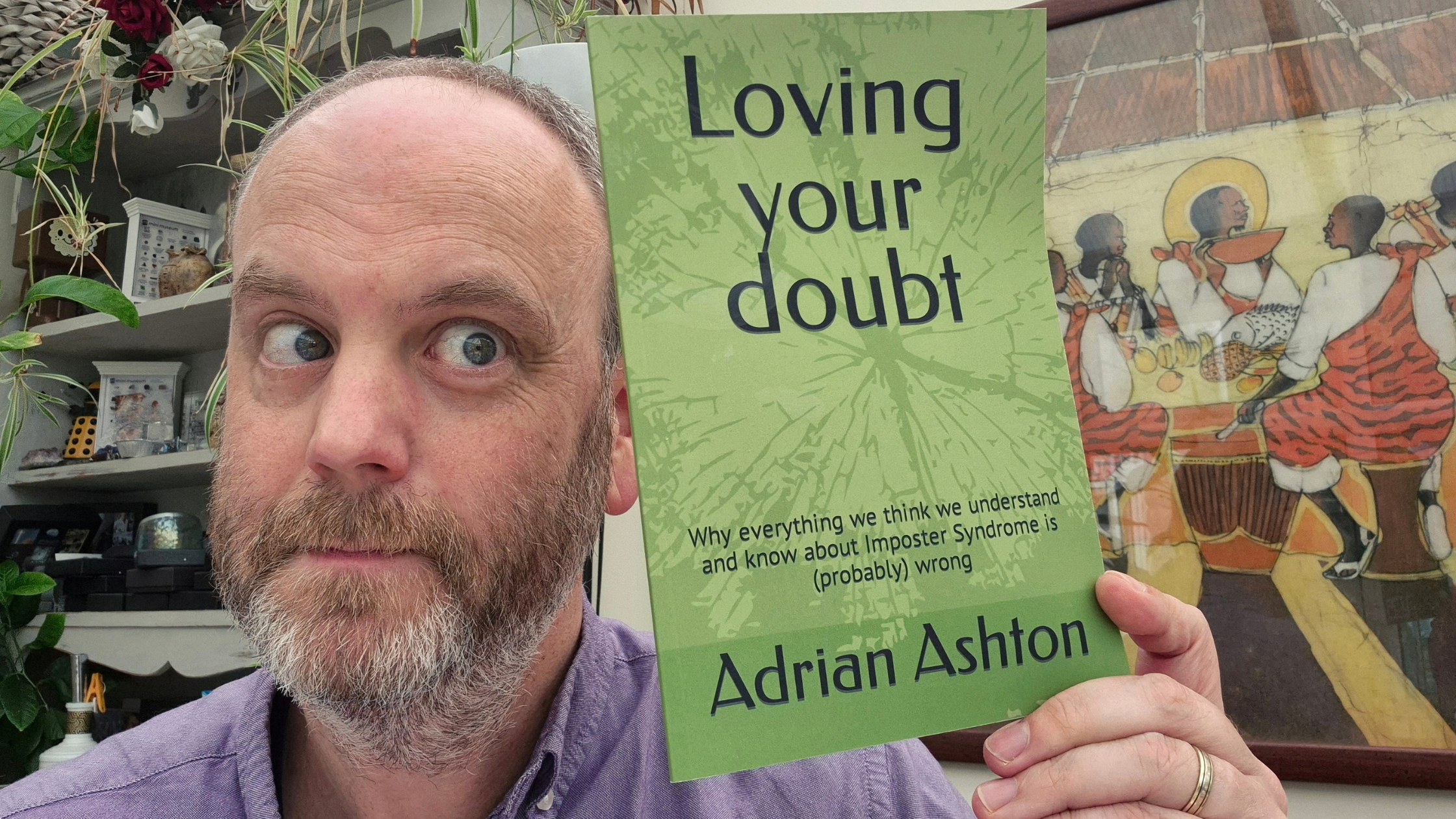
Katy Lassetter asks author Adrian Ashton about self-publishing “his own way”. Adrian didn’t intend to start a business as an enterprise consultant. But he’s since won awards recognising his impact on individual client organisations and the ecosystems that businesses operate within. Encouraged by others, he then wrote and published a book based on his experiences. Here he talks about everything from imposter syndrome to making “rookie mistakes” along the way.
Tell me about your books…
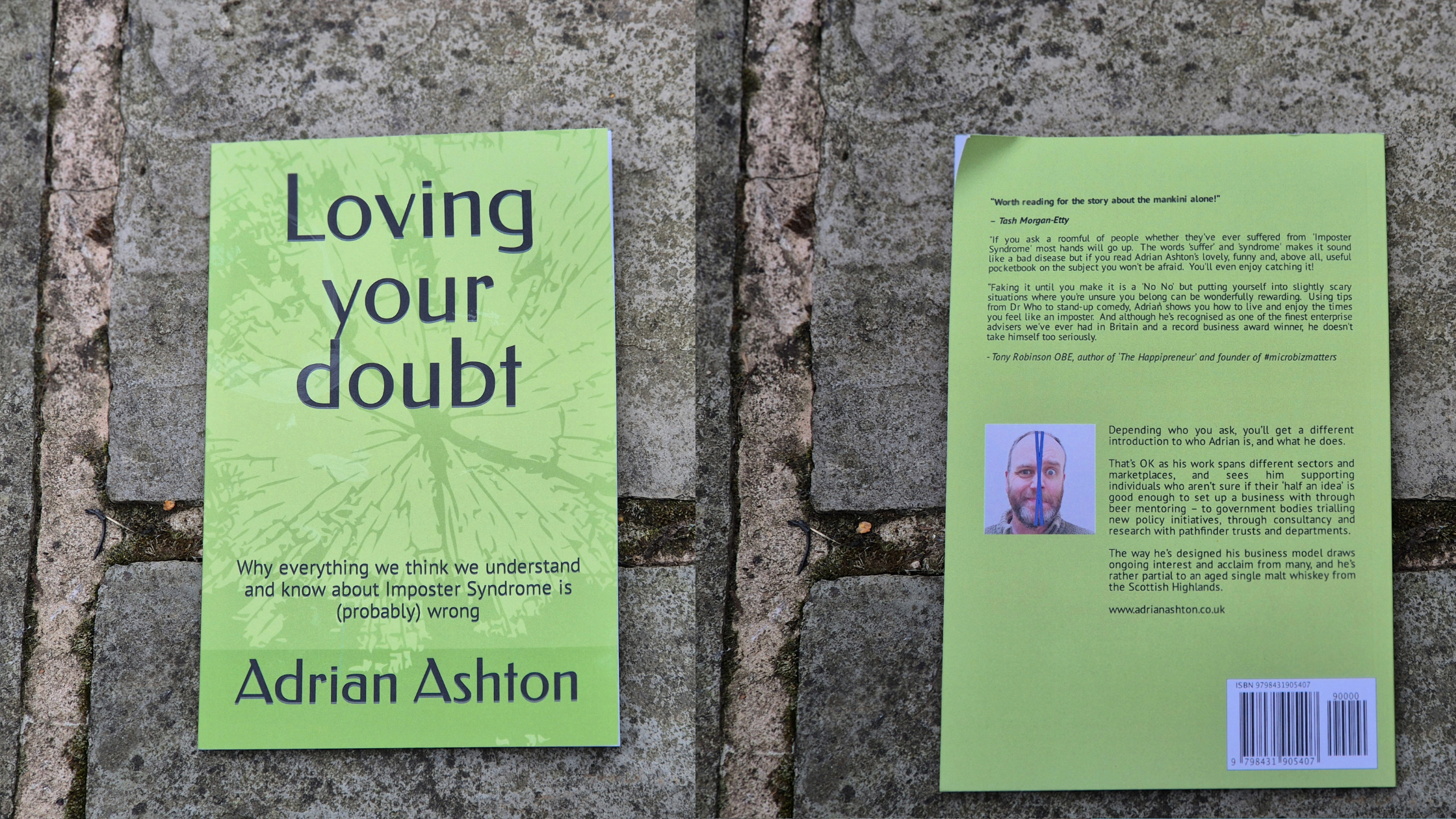
Loving Your Doubt is about my accidental journey into the land of imposter syndrome. It’s how I came to realise it’s not what people think it is – but can actually be a superpower.
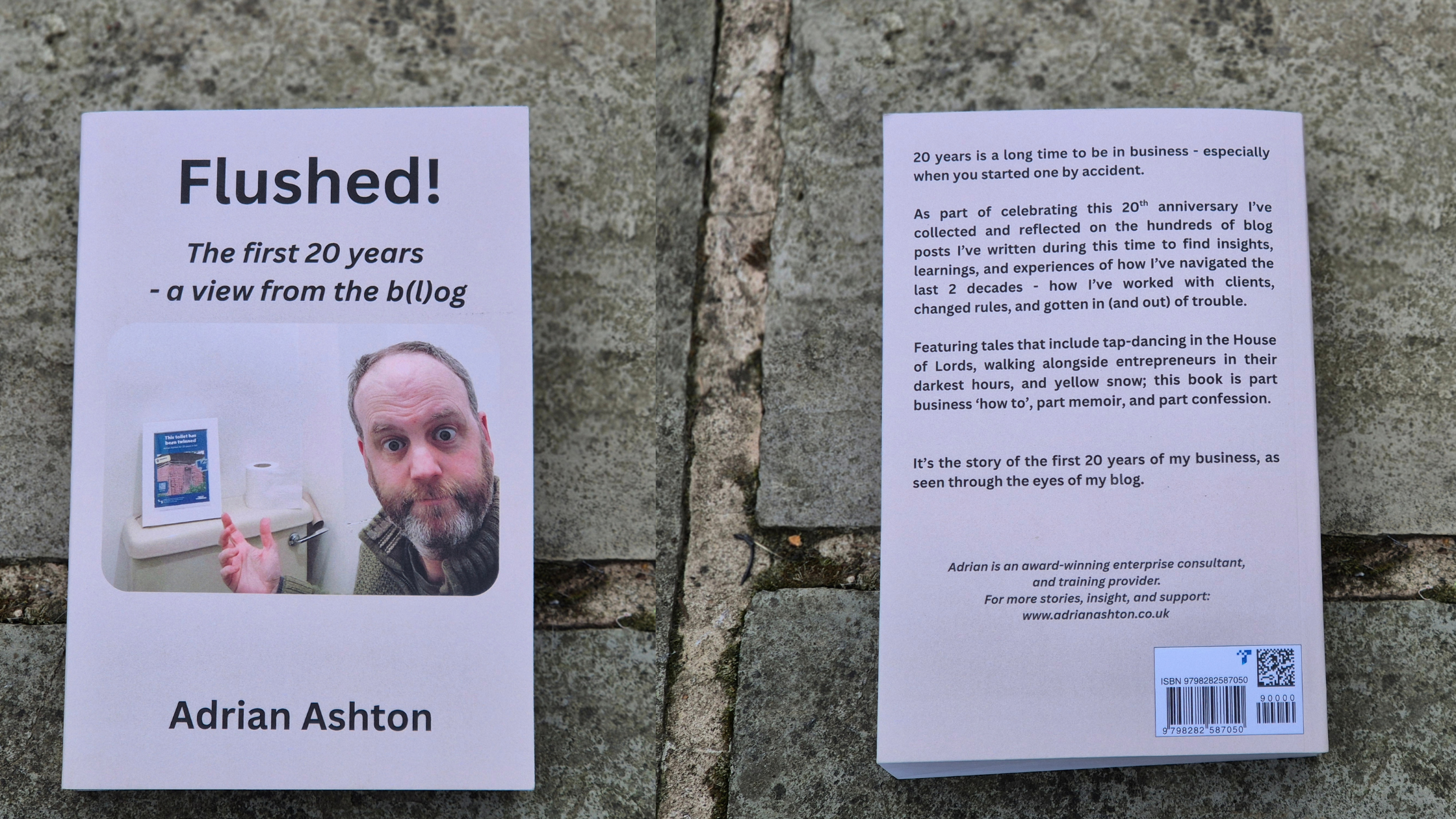
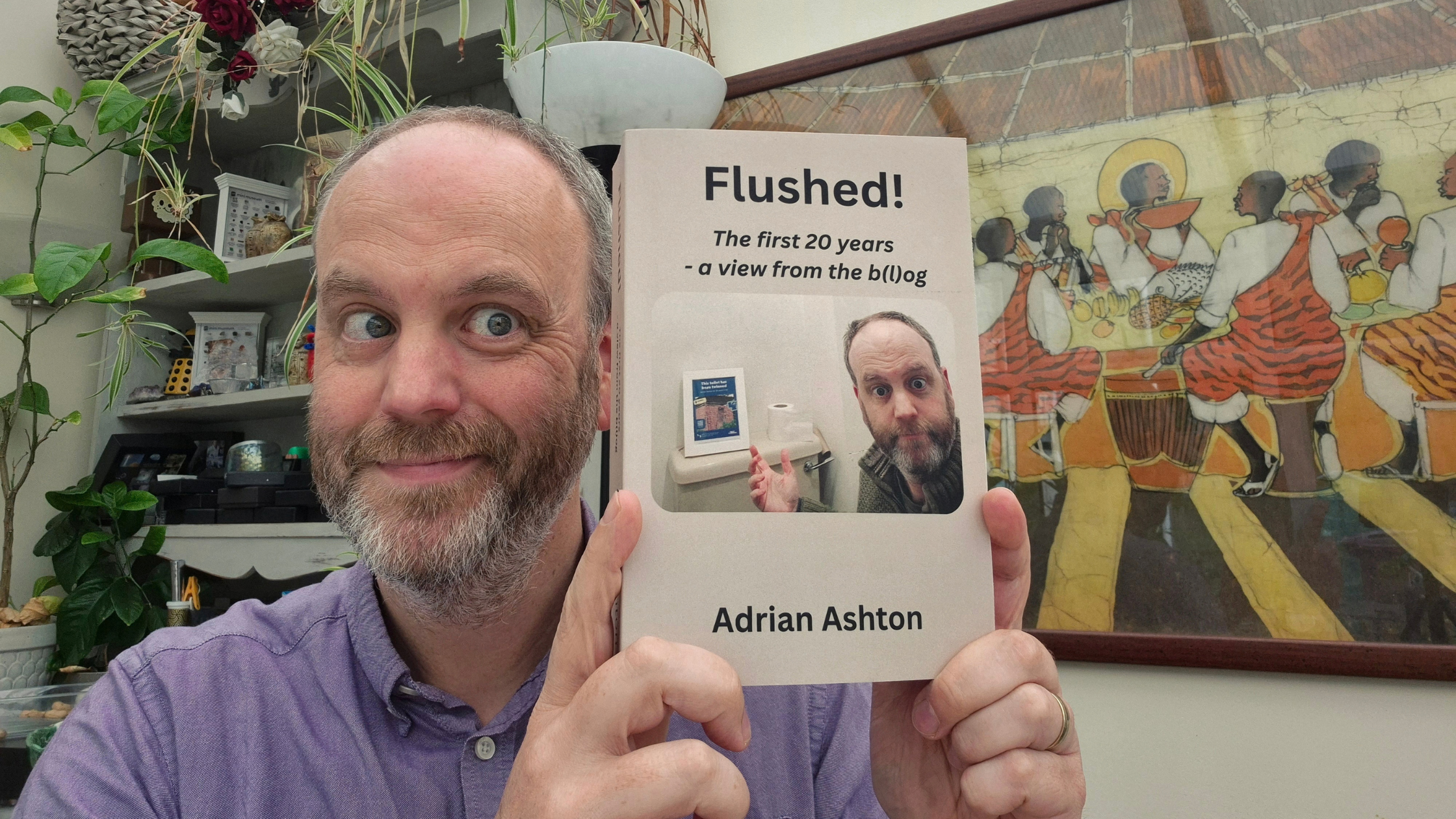
Flushed is a reflection on the approaches I’ve taken — and lessons learned — when running a business I never meant to start up. This business has outlasted over 95% of other companies.
Who are your books aimed at?
If you’ve ever struggled with self-doubt, Loving your Doubt is for you. But I didn’t write it with a specific audience in mind. Several people encouraged me to write up my notes and research on the subject. So, I wanted to see where this trail might lead…
Flushed is for anyone setting up a business or who wants to feel braver when taking risks in an established business.
If your books were a drink or sweet, what would they be?
It has to be Laphroaig whiskey for Loving Your Doubt. It’s potent and concentrated. You must be open-minded or adventurous to spend time with it…
And a tin of quality street chocolates for Flushed. People have told me they enjoy how easy it is to ‘jump around’ different sections of the book. They pick and choose the most appealing themes, passing on things they’re not bothered by. Just like when you leave those chocolates in the tin that don’t do it for you.
Where did the ideas for your books come from?
For Loving Your Doubt, I was at a freelancers’ conference. One of the keynote speakers said something like: “Your life will always be sh*t until you get rid of your imposter syndrome, and every freelancer battles with it”.
I didn’t agree with them at the time but didn’t know why. And they wouldn’t respond to my attempts to question this assertion further. So, I started to research the subject, drawing on 50+ years of published medical and other academic research studies. This led to my conclusion that it isn’t what everyone says and thinks it is…
Reaching the 20th anniversary of my business is a major milestone. Only 5% of all companies make it that far. So, with Flushed, I wanted to professionally reflect on two decades of breaking all the rules about how businesses are supposed to be run…
What was your main motivation to write your books?
Initially, I wrote Loving Your Doubt to ‘scratch an itch’ and figure out why I couldn’t agree with that ‘expert’ speaker. Subsequently, it was encouragement from several people whom I asked to sense-check my notes. They all encouraged me to put it out into the world as a book.
And with Flushed, it was about creating a physical artefact to commemorate my business milestone.
Where’s your favourite place to write?
Anywhere I can look out of a window.
What’s your favourite writing snack and accessory?
Coffee, notepad and Lego bricks.
How did you self-publish your books?
As an unpaid carer, I don’t have a lot of spare cash lying around to invest in publishing support. So, I navigated the Amazon KDP prompts to get it ‘out’ without any support. That seemed the easiest path to go down.
With hindsight, I made some rookie mistakes. But that didn’t stop Loving Your Doubt from becoming a global bestseller. It also won an award and generated lots of other unexpected outcomes. This led me to revisit the land of imposters for a second volume…
Did you have your book typeset and your cover art created professionally?
Only in the sense that I used KDP’s templates. Again, with hindsight, not the best decision. But it hasn’t stopped my success with Loving Your Doubt, including continuing to sell copies over four years after its release.
For Flushed, I used Canva to create a simple cover design. This features my office toilet — porcelain is the material associated with a 20th anniversary.
Was your book edited and proofread?
Only by me and a contact in my network who was a copywriter and wanted to do me a favour.
Would you use professionals if you published again?
Probably not… Despite the now obvious slips in design and editing in places, no one who’s read my books has found those things to have lessened their enjoyment and impact.
I also increasingly find writing to be my main respite as an unpaid carer, so I’m trying to ‘protect’ this sanctuary it offers me. I have an idea that if I start to involve professional editors, this will lessen the enjoyment and benefit that writing currently offers me personally.
Not if you find the right editor, Adrian. There are plenty of empathic editors who build relationships with their authors and give kind, constructive feedback. Some even offer free interviews to help authors share their experiences and promote their books…
What lesson did you learn from self-publishing your books?
I looked around for advice and support at the time I started writing Loving Your Doubt. But everything I found was either based on paying sums of money upfront, which I couldn’t afford, or following a series of steps that weren’t possible with my caring responsibilities.
Therefore, I forged my own path with writing and self-publishing that ignored all the usual guidance. I managed to find some degree of success from it regardless! The learning for me was that it’s OK to do it your way.
And I learnt not to use a standard KDP cover design (especially the green one, as it often disappears when you hold it up on a video call).
When creating Flushed, I learnt a couple more lessons:
- Check the maximum page count the printers can physically handle. My first manuscript was too long to be physically printed when I tried to upload it, so I had to edit it down.
- Allow plenty of time to receive proof copies. My first ones were destroyed en route in a freak accident involving a crate of hand lotion — words were literally dripping off the page!
What was the most satisfying part of the self-publishing process for you?
Both books gave me time to do/be something completely different to my usual daily and working life. And it was exciting to see them accepted and appear on the shelves of different libraries (I’ve always loved hanging out in libraries since I was a little kid).
When it came to Flushed, being able to create my own index was also a lot of fun. Yellow snow, kleptomania, body parts and Hugh Laurie all feature. And that even without any professional support, email list or launch party, the book somehow charted in Amazon’s top 100 bestseller list twice within its first year!
What advice would you give to others looking to start the self- publishing journey?
Don’t be afraid to do it your own way. The DIY approach with KDP’s templates and a basic knowledge of Canva can get your book into the hands of people who’ll be encouraged by it. Accept that when you get your book out there, there’ll be things you spot that you’re upset and embarrassed by, but it’s likely no one else will notice…
Do you have plans to write and publish any more books?
Yes — writing has given me the bug. Not only as respite from my unpaid carer role, but also as a way to explore ideas and themes in ways that are more enjoyable for me.
What would you do differently next time?
Honestly, I’m not sure. After writing and publishing two books, I feel like I worked out how to avoid all the rookie mistakes I made with the first. But for future books, I’m thinking about the wider self-publishing processes beyond writing, e.g. book marketing and PR — building up more interest in advance of launch and trying to be more proactive in getting it in front of podcast hosts.
Self-publishing support, your way
Adrian’s an advocate for doing self-publishing your own way. And he’s right. You don’t want to be told what to do with your own books, like with traditional publishing.
But despite his success, many books don’t sell or receive damaging reviews because the flow’s not there, the grammar’s clunky, the message’s unclear, and they’re just plain hard work to get through.
As many authors I’ve interviewed before have said, even if you do a lot of the work yourself, there are costs involved from editing to printing to book marketing — all of which are key to the process and add value to your book.
Author Christian Hopper saw this value for his business book: ““Katy was very helpful, professional, clear and pragmatic as a developmental editor when engaged to support my self-publishing ambition and sort out a messy, clunky first draft. She talked me through the processes from start to finish, offered to broker help for various tasks such as graphic design, was consistently prompt in her responses and helped me see the wood for the trees. A great asset to help you get it right/improve writing on paper, so I would use her again (once I get the thing finished 100%!)”
I’m not just a professional editor and proofreader. I can help you with all stages of the self-publishing process. This includes:
- Self-publishing Surgery — an 1:1 consultation with a full review and report where you can ask me anything to get the clarity and confidence you need about your writing, publishing and/or book marketing
- Editing — developmental, line and copyediting to make your book clear, consistent and compelling
- Proofreading — to polish your manuscript
- Typesetting — to make your book easy on the eye and easy to read
- Cover design — because readers do judge them
- Manuscript uploads — setup and submission of your book to a publishing platform of your choice with metadata preparation and support.
- Printing and publishing — on-demand online or through a specialist printer
- Book marketing and PR — to help you fly up the bestseller charts
I can even help you budget for your self-publishing project, and with affordable downloads (£25 each) to help you choose the best self-publishing platform, become an author and create a basic book layout.
Do you want your self-help or business book to fly? Get in touch to find out more about my professional self-publishing services.