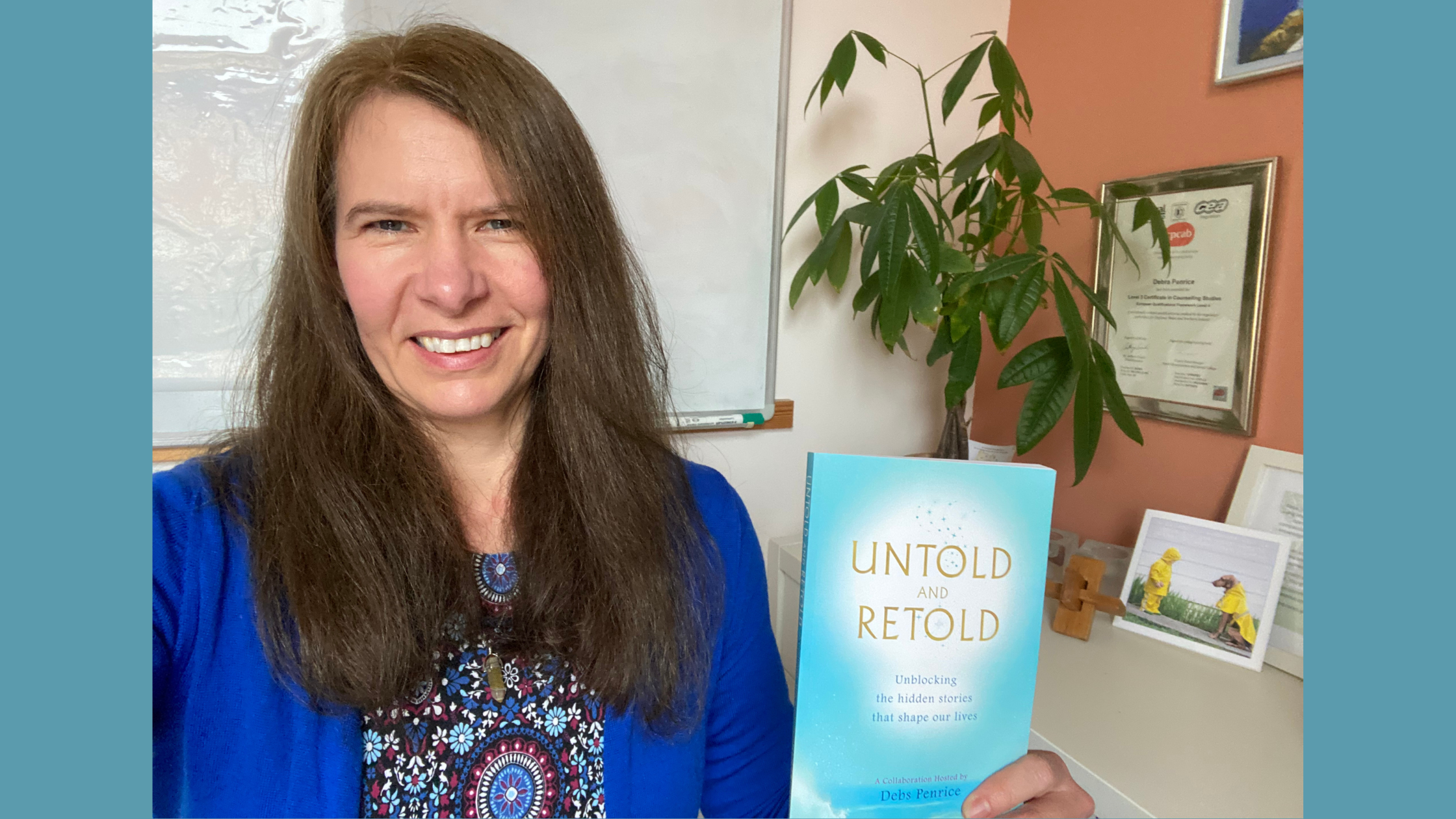
In the 11th ‘Chichester Copywriter Chats’, Katy Lassetter talks to hypnotherapist, writing coach and anthology author Debs Penrice. Speaking from experience, story healer Debs recommends using professionals to improve the quality of your book. As she says, too many self-published books won’t sell because they’re not well designed for readers…
Tell me about your anthology
In Untold and Retold (Stories that Heal Volume I), brave voices come together to explore the powerful role storytelling plays in our lives. Through personal journeys and stories of transformation, this anthology shines a light on how unspoken experiences and hidden feelings influence our relationships. We explore what’s possible when we give those hidden stories a voice. Each story comes from a:
- Personal growth journey
- Client transformation
- Fictionalised experience or a metaphor
The book launches on 5 March, which is also World Book Day, at Goldney House Wellness Centre and Business Space in Bristol.
Who’s it aimed at?
This anthology is for anyone who’s reached a stage in their life where they’re reflecting on their own experiences. They might be wondering if they have something to share, either privately in therapy or more publicly as life lessons. In reading our short stories, you’ll discover how reflecting and reframing can help you unblock your own story with gentle compassion. It’s an invitation to:
- Recognise the wisdom in your life experiences
- Permit yourself to share your stories
- Begin writing the story only you can tell
If your anthology were a drink, what would it be?
The anthology series (volume II coming soon!) is most definitely like a warming cup of freshly ground coffee. Comforting, yet an injection of energy to boost your creative spark.
Where did the idea for your anthology come from?
The book, Untold and Retold, began when I started writing about how therapeutic the creative arts are. Creativity and anxiety can’t co-exist, which I learned during art therapy several years ago. My mind would wander while I was drawing, and I soon realised the same is true when you write in flow. The trick is to release the pressure — no judgment about the quality or direction of your writing, simply write.
I got stuck once, a few chapters in, and one of my brilliant friends (Lesley) reminded me that my model as a marketing copywriter was to build a narrative around case studies. So, the anthology idea blossomed from there — I invited my co-authors to step in and share stories of healing or transformation. They’re all therapists, coaches and business owners too.
What was your main inspiration to write a book?
My initial inspiration for writing came from business coach Robin Waite. He was working with me in 2017. As I interviewed his clients for case studies, he shared his thoughts on how I could improve the process. He was already a published author and suggested I write a book to promote my business too. In fact, his second book, Take Your Shot, is one long coaching case study. And I had the honour of being a beta reader for him before it was published.
Where’s your favourite place to write?
I’d say on the beach. But the reality is, it can get a bit windy in the UK, so I’m comfortable and happy writing in my little office at home. If I get fed up with being indoors, I’ll head out to one of the local cafes to write there.
What’s your favourite writing accessory?
That’s a tough one, but it’s probably my pack of felt-tip pens. I’ll often start with a bright coloured mind map before I write.
As a copywriter, did you find parts of the book writing process easier or more challenging?
The three chapters I wrote flowed really easily, but I had to wait until I was feeling super relaxed and not tired. Copywriting for others, I can work under pressure with structure, keywords and value-based themes. I can piece paragraphs together like a jigsaw. Whereas with my short stories, I wrote them in a continuous sitting, like unravelling a ball of wool without stopping.
How did you self-publish?
For the writing process, I coached my co-authors on turning their stories into fiction. With the editing, I went to a professional editor for developmental and copyedits. Then, with the publishing, I used Atticus for formatting the files and uploading the epub and PDF to Amazon.
When it came to printing, I started with a BookVault proof and ended up ordering the bulk print from Amazon so that I could compare the quality. Next time, I’d prefer to use a specialist or local printer because I’m not a fan of how Amazon squeezes the margins for brick-and-mortar bookshops.
Did you have your anthology typeset?
No, I did that myself. However, next time, I’d like to use a book interior designer. There were some limitations on how I could present a ‘letter’ in one of the stories.
Did you have your cover art created?
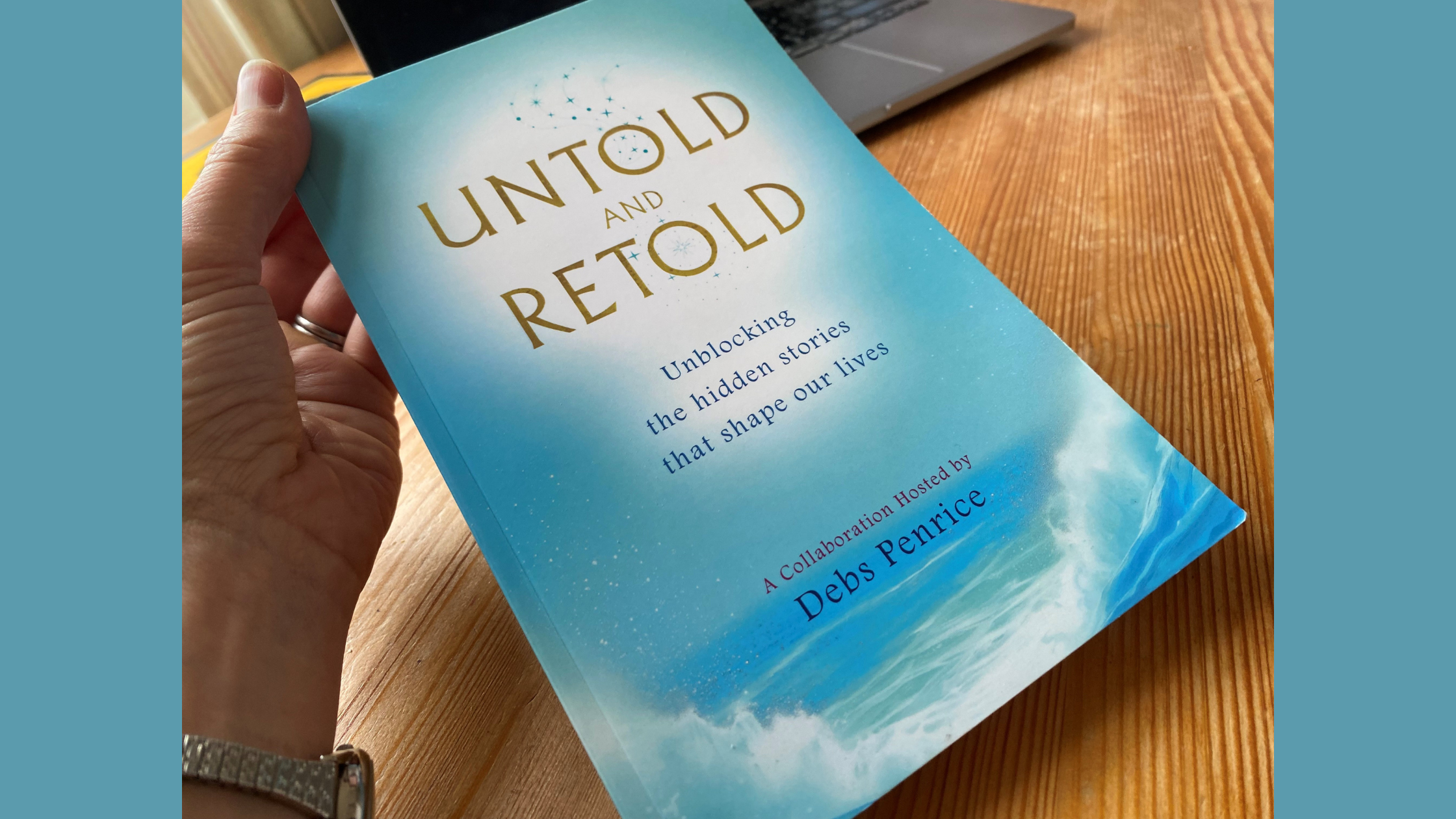
Yes, I worked with Abigail Barnes and her ‘Idea to Author’ design team. They’re simply brilliant, and I LOVE the cover they came up with. I created the mood board with colours and other covers I liked, she ran through her Cover Creator Call with me, and then her team truly worked their magic.
Did you have your anthology edited and proofread by professionals?
Yes, I found a professional editor who gave a developmental treatment to some of the stories and did a copyedit on the whole anthology. Another author proofread the book once it was in the PDF format.
What did the professional editor bring to the table?
The editor improved the flow of the anthology enormously. She helped me decide on an order to present the stories. She saw the individual stories first, and then together we tweaked the narrative pieces I’d written to introduce each chapter.
Would you use professionals if you published again?
Yes, I’d use professionals and will do so for Stories that Heal Volume II.
What was the hardest part of the anthology self-publishing process for you?
Learning how to use Atticus software and create an interior design I was happy with for this anthology was the hardest part. It’s very detailed work, and I lost a lot of time doing it myself. The lesson was that I’ll need a larger budget for a professional designer next time.
What was the most satisfying part of the self-publishing process for you?
As soon as the book was formatted into a PDF (but not quite finalised), I recruited a team of beta readers to review it for us. Up until that point, the editor and I were the only two people who had read the whole anthology. Even the other co-authors hadn’t read each other’s chapters. It was such a joy to hear the feedback from the beta reader team.
What advice would you give to other writers looking to start the self-publishing journey?
I’d recommend that you finish all the writing, leave it alone for at least a week and then self-edit before you engage outside help. I hired an editor while we were still writing. That made it hard for her to see the whole narrative in one piece, even though she edited each short story in turn.
Decide whether you’ve got time to manage the whole project yourself — using professionals will improve the quality of your finished book. There are too many self-published books out there that won’t sell because they’re not well designed for readers. Think about hiring an editor, a cover designer, a typesetter or interior designer and a proofreader. Then you’ll be ready to look at publishing and distribution.
Do you have plans to write and publish any more books?
Yes, I’m working very slowly on writing a novel and the second volume of ‘Stories that Heal’ will begin in October 2026.
Anyone who’s a coach, therapist, healer, writer or business owner is welcome to apply for this collaboration. The theme is Compassionate Listening. When did you share a secret with someone else or help a client through something they had been hiding from the world? How did the listening process support you or them emotionally? And what was the outcome after the lid had been lifted?
If you take part, I’ll work with you to turn your story into fiction to protect the privacy of your main characters. If you’re covering a client story in this collaboration book, please ask for their permission even when their identity can remain anonymous.
What would you do differently next time?
Last time, I ran group coaching sessions on developing characters and defining the start and end points for short stories. However, not everyone could make the session dates. So, I’ll build some earlier one-to-one writing coaching into the collaboration programme.
Some of my co-authors needed more guidance to turn their story into fiction. So, once the first drafts are finished, I’ll put the whole manuscript together and then hire a developmental editor to work on every chapter.
Thanks, Debs. I’m so glad we met, and I now attend your weekly Creative Café sessions to get on with my own book writing. Enjoy the magic of your book launch! I look forward to hearing more about your novel and seeing how the second volume of your anthology comes together.
Professional editing and proofreading for your self-publishing project
So, Debs recommends you step back from your writing and self-edit before looking for expert help. This distance will give you some clarity and help you make improvements to cut down waffle and costs before getting a professional editor involved.
Like many of the other self-published authors I’ve interviewed, Debs sees the value of engaging professionals to help at each stage of the self-publishing process. The value being that you’ll create a book that looks good, reads well and sells.
I can help you with all stages of the self-publishing process:
- Self-publishing Surgery — a 1:1 consultation online where you can ask me anything about writing, self-publishing and book marketing for £150
- Editing — developmental, line and/or copyediting to make your book clear, consistent and compelling
- Proofreading — to polish your manuscript ready for print
- Typesetting — to make your book easy on the eye and easy to read
- Cover design — because readers do judge them!
- Manuscript uploads — uploads to a publishing platform of your choice (Amazon KDP, Draft2Digital or IngramSpark).
- Printing — on-demand online or through a specialist printer
- Book marketing and PR – to help you fly up the bestseller charts
And with my seamless self-publishing project management, you’ll stay on track to meet your book launch date. Wellbeing author Sharon Brisley-Moore endorses this: “Katy, from our very first phone call, put me at ease, holding my hand through the whole process. By giving her all, Katy gave me a finished product I am proud to show the world”.
Do you want me to make your wellbeing book or anthology fly? Get in touch to find out more about my professional self-publishing services.